
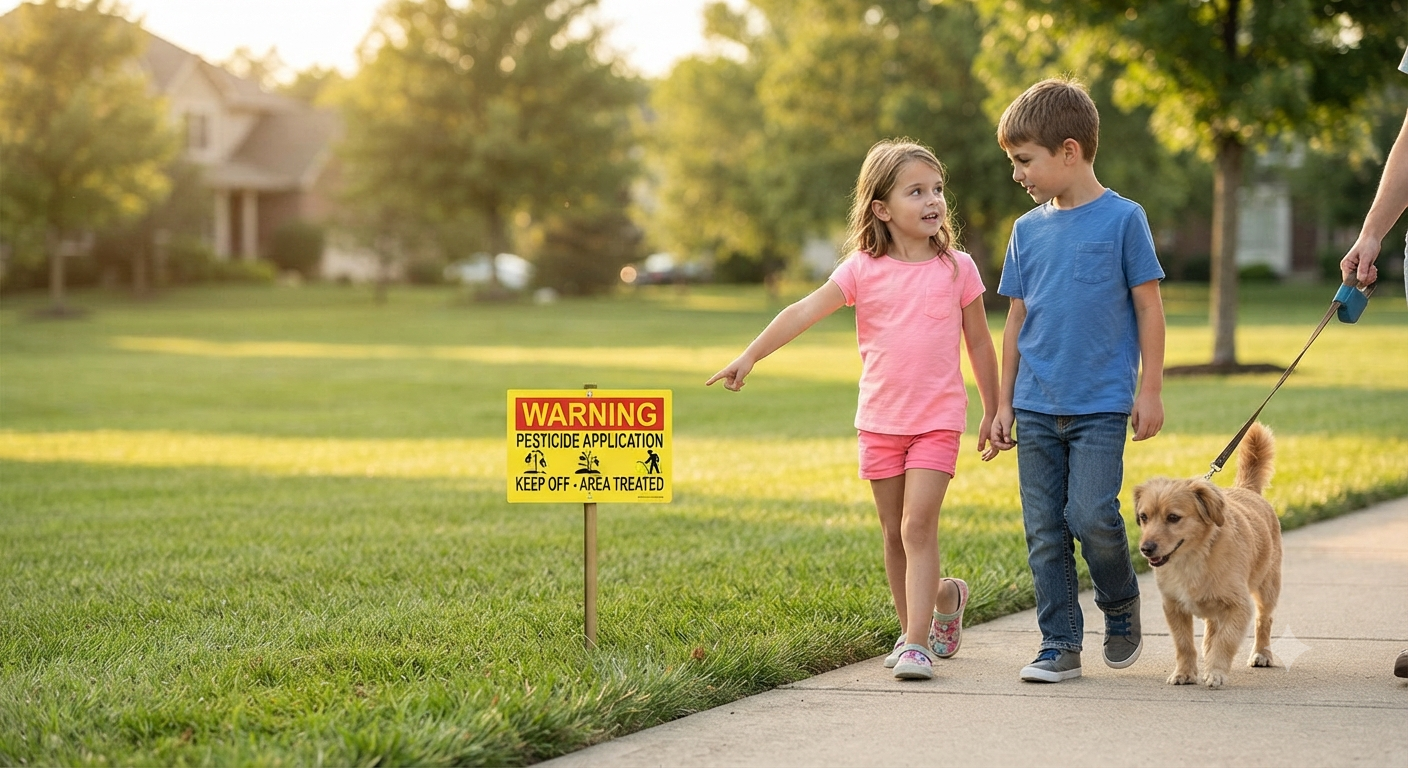
A campaign to help communities move away from toxic weed killers in parks, streets, schools, and home landscapes—and toward safer, living alternatives.
Sponsored by:
[Sponsor Logo] [Sponsor Logo] [Sponsor Logo]
Featured nonprofit:
Beyond Pesticides
Campaign goal:
500 resident guide downloads
Progress bar:
█████████░░░░░░░░
120 / 500 downloads
This campaign is part of our monthly series, where we spotlight one environmental issue at a time, share practical resources, and help inspire real-world change.
The Invisible Infrastructure of Weed Control
Every time I visit my local park in the summer, I see park employees spraying chemical weed killers and herbicides around the path, parking lot, and cracks in the pavement.
Most of us have seen some version of that scene. A city crew sprays the cracks in a sidewalk. A park edge gets treated before the weekend. A schoolyard or median is cleared of green growth so the space looks “managed.”
Or take the baseball field, where spraying often happens around the dugout area, the fire hydrants, and the edges of buildings.
The problem is that this kind of routine maintenance has consequences we often ignore: for pollinators, soil life, waterways, pets, children, and the long-term health of the landscapes we share.
And we are all indirectly supporting this, because our tax dollars are paying for it.
The good news is that we the People also have the power to stop this kind of toxic land management and demand change in the way our shared public spaces are maintained.
This campaign, informed by the research and advocacy of Beyond Pesticides, is about changing that pattern. It is about helping communities across the United States transition away from chemical weed killers, including glyphosate, and toward healthier, living landscapes. Cities can change. Homeowners can change too. And when both shift at once, the cultural norm begins to move.