
Why communities are rethinking routine chemical use—and what can come next
Part of Network for Ecology’s Chemical-Free Communities series.
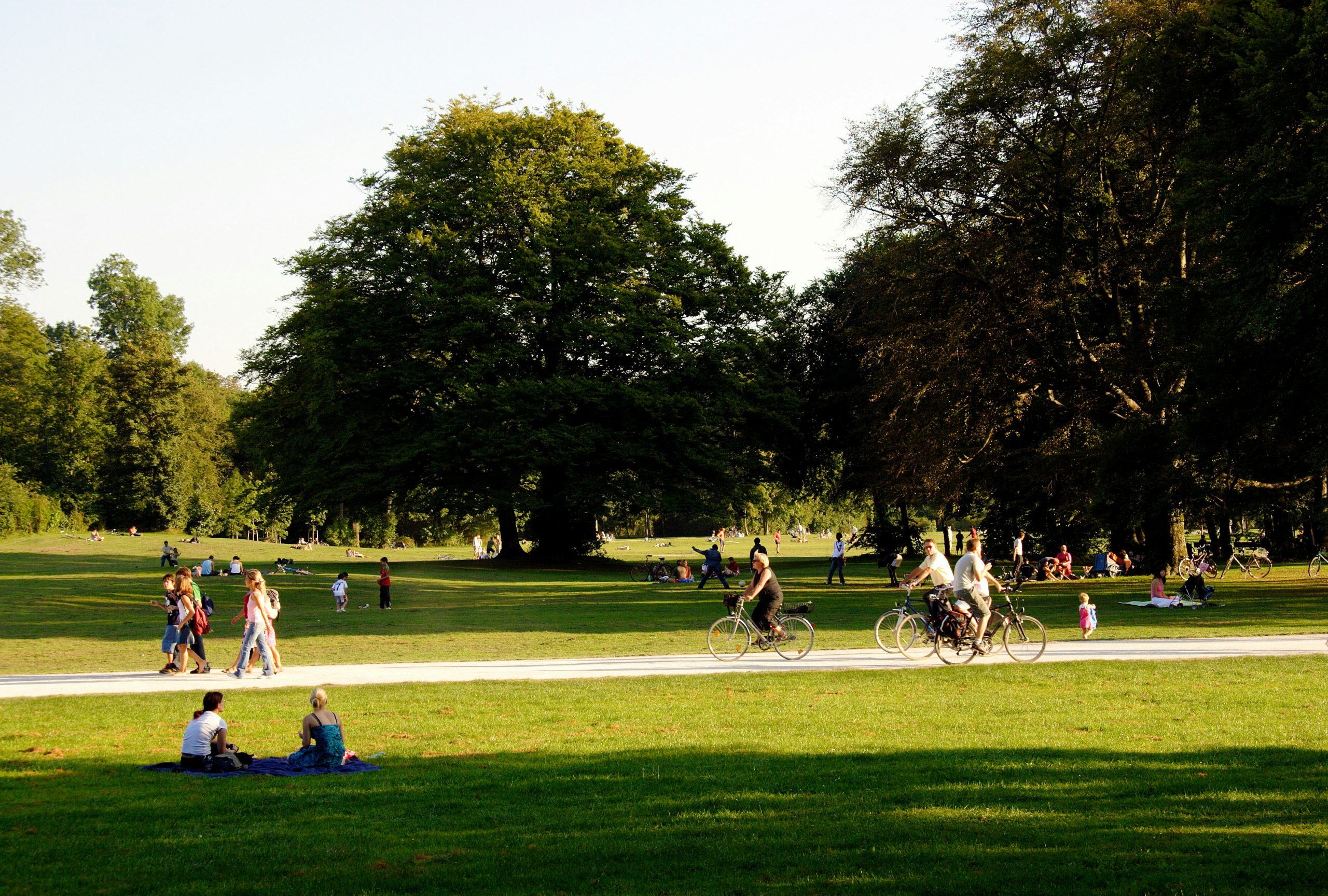
Every child deserves a park where they can run, explore, and fall in the grass without wondering what was sprayed there. Every family deserves clean water, healthy soil, thriving pollinators, and green spaces that bring life to a neighborhood instead of silently diminishing it.
Across cities, suburbs, and rural communities, chemical products are routinely applied in the places woven into daily life: lawns, parks, athletic fields, sidewalks, roadsides, parking lots, drainage areas, golf courses, gardens, public rights-of-way, schools, and houses of worship. These applications are often treated as ordinary maintenance—part of keeping spaces tidy, safe, or attractive.
But public landscapes are shared landscapes. Children play on school grounds. Families walk dogs through parks. Neighbors garden beside sidewalks and drainage ditches. Congregations gather on church lawns and outdoor spaces. Pollinators move between yards, street trees, gardens, and natural areas. And rain carries what is on the ground into the wider watershed.
The question is not whether communities should care for their land. The question is whether they can care for it in a way that protects people, pets, pollinators, soil, water, and wildlife.
The Chemical Footprint
A neighborhood may experience chemical use in ways that are barely noticed: a truck moves through before dawn; a worker treats weeds along a walking trail, school fence line, church property, or curb; granules are spread on a field; a pond receives a treatment.
By the time children arrive, families walk their dogs, or rain begins to fall, few people may know what was used—or where it can go next.
The chemical footprint extends beyond a single weed killer. Common product categories used in community landscapes include:
- Herbicides, used to kill weeds and vegetation along paths, fence lines, medians, lawns, parks, and agricultural edges.
- Insecticides, used against mosquitoes, grubs, ants, ticks, lawn insects, and other pests.
- Fungicides, used on turf, ornamental plants, trees, gardens, and sports fields.
- Algaecides, used in ponds, lakes, fountains, stormwater features, and other water bodies to suppress algae.
- Rodenticides, used to control rats and mice; these can also harm wildlife that consumes poisoned animals.
- Fertilizers and lawn additives, which can contribute nutrients to waterways and fuel harmful algal growth.
- Disinfectants and other biocides, used around outdoor facilities, hardscapes, drainage infrastructure, and landscaping operations.
These materials do not necessarily remain where they are applied. Pesticide drift is the movement of pesticide droplets or dust away from the intended application site during or soon after application. Rain and stormwater can also transport pesticide residues and other contaminants from urban landscapes into drains, creeks, ponds, wetlands, and streams.
The U.S. Geological Survey has documented pesticides in urban waterways. One USGS study found 16 dissolved pesticides consistently detected in small streams across 16 urban centers in five U.S. regions.
The same concern exists close to home. Chemicals applied to lawns, driveways, gardens, and fence lines can move with rainwater, enter drainage systems, reach neighboring properties, or be carried indoors on shoes and pets’ paws. For households that rely on private wells, protecting the land around the wellhead is especially important because pesticides have been detected in groundwater beneath urban and agricultural land uses. USGS groundwater research documents the long-term monitoring of pesticide concentrations in principal aquifers across the contiguous United States.
This is not simply a question of whether a lawn looks neat or a sidewalk looks weed-free. It is a question of what kind of environment is being created around homes, schools, parks, churches, waterways, and neighborhoods—and whether convenience today is worth the impacts that may travel beyond the spray line.
Beyond the Spray Line: Food-Web Effects
The effects of a pesticide or rodenticide do not stop with the organism it was meant to kill.
When a chemical is sprayed around a building, sidewalk, park edge, schoolyard, garden, or drainage area, it can come into contact with far more than the target pest. Bees and other pollinators may encounter treated flowers, leaves, soil, water, or contaminated pollen and nectar. Butterflies, moths, beetles, and other insects can be harmed directly or indirectly when the plants and habitats they depend on are treated.
Small animals also live close to the ground where many applications occur. Frogs, toads, lizards, salamanders, snakes, earthworms, and beneficial insects may move across treated surfaces, forage in treated vegetation, consume contaminated prey, or encounter residues carried by runoff. Pesticide exposure for amphibians and reptiles can occur through contact with treated surfaces, food, water, and spray drift; the outcome depends on the chemical, dose, timing, exposure route, species, and conditions. EPA’s terrestrial amphibian and reptile risk model and a scientific review of pesticide risks to amphibians and reptiles both recognize these potential exposure pathways.
Then there is the danger of secondary poisoning—when an animal is harmed after eating another animal that has already consumed poison.
Rodenticides provide one of the clearest examples. A mouse, rat, gopher, or other rodent may consume toxic bait and become weakened, disoriented, or slow-moving. That can make it easier prey for an owl, hawk, kestrel, fox, bobcat, coyote, domestic cat, or dog. When a predator or scavenger eats the contaminated animal, it can also be exposed to the poison.
The U.S. Environmental Protection Agency recognizes that non-target wildlife and pets can be poisoned after eating rodents that consumed certain rodenticides. EPA safety measures for some rodent-control products are intended in part to reduce this risk to mammals and birds that eat poisoned prey. EPA: Rodent Control Pesticide Safety Review
Birds of prey are particularly vulnerable because they naturally help control rodent populations. A scientific review of anticoagulant rodenticides found that secondary poisoning of non-target animals—especially raptors—is a widespread consequence of their use. The National Pesticide Information Center likewise notes that secondary poisoning occurs when an animal eats poisoned prey, and that some rodenticide products pose risks to birds such as hawks and owls, as well as wild mammals, dogs, and cats. Review of anticoagulant rodenticide poisoning and NPIC’s rodenticide fact sheet
The consequences are not always immediate or visible. Some rodenticides can remain in animal tissues, and repeated consumption of contaminated prey may increase exposure over time. Research on coyotes has described secondary exposure to anticoagulant rodenticides as a threat that can cause direct death as well as sublethal effects that reduce an animal’s ability to survive and reproduce. Coyote exposure study
Mange is caused by mites—not rodenticides themselves. However, wildlife research has identified an association between anticoagulant rodenticide exposure and severe mange in some predator populations, including research involving bobcats and mountain lions. Poison exposure may weaken an animal or make it less able to withstand disease, injury, and other pressures. National Park Service: Rodenticides
For example, a community may see an owl disappear from a familiar tree, a hawk fail to return to a hunting ground, or a coyote with thinning fur and visible skin disease—without seeing the hidden chain of events behind it. The connection can begin far earlier: a bait box behind a business, poison placed near a dumpster, a treated patch of vegetation, or a routine application around a building.
This is why responsible land care must look beyond the immediate target. It must ask not only:
Will this kill the pest?
But also:
What else might it harm, and what happens next in the food web?
The good news is that preventing pests does not require accepting collateral damage as unavoidable. Better sanitation, secure waste systems, building exclusion, habitat management, monitoring, and carefully managed physical or mechanical controls can reduce the conditions that attract pests before poison becomes the default response. A prevention-first, rodenticide-free approach protects wildlife and pets while addressing the conditions that allow pest problems to persist.
The Story Behind a Spray Application
The impact of a lawn or park chemical does not begin when someone pulls a spray trigger—and it does not end when the visible weeds disappear.
Before a product reaches a neighborhood, it may pass through a long industrial chain: extraction of raw materials, chemical processing, manufacturing, packaging, transportation, storage, sale, application, and disposal. At each stage, there can be implications for workers, nearby communities, land, air, and water.
Then the product enters the landscape. It may be applied with a backpack sprayer beside a playground, a truck-mounted system along streets, granular spreaders across a field, mosquito-fogging equipment near homes, or direct treatment of a pond or drainage area. Chemicals may also be used around houses of worship, whose lawns, gardens, parking areas, and gathering spaces are part of daily community life.
The method varies, but the questions should remain the same:
- Was this application necessary?
- Who may be exposed, and how is the public notified?
- Where can the product travel after application?
- What could it mean for children, workers, pets, pollinators, soil organisms, birds, fish, and other wildlife?
- Was the product evaluated only for short-term effectiveness—or also for its place in a circular and regenerative system?
- Could landscape design, maintenance, prevention, or a nonchemical method have avoided the problem in the first place?
Too often, these questions are eclipsed by speed, appearance, habit, or convenience. For homeowners, they may also be eclipsed by pressure to “keep up with the Joneses”—to have the greenest, most uniform lawn on the block, even when achieving that look depends on repeated chemical inputs.
Communities deserve more than landscapes that appear controlled from a distance. They deserve land care that considers the wider web of life.
Transparency Is Part of Stewardship
Communities cannot participate meaningfully in land-care decisions if they do not know what is being applied in the places they share.
At a minimum, public agencies and contractors should make pesticide and rodenticide product names, active ingredients, application locations, dates, notification procedures, and contractor information easy to find. Residents should not have to discover an application only after seeing a warning sign, smelling a chemical odor, or watching a truck leave a public park.
Transparency does not solve every problem. But it gives residents, parents, workers, land managers, and local officials the information needed to ask better questions, identify safer alternatives, and participate in decisions that affect shared land, water, and wildlife.
An Ethic of Less Harm
This conversation is not only technical. It is moral, cultural, and, for many people, spiritual.
Ahimsa is often understood as non-harm: a commitment to reduce unnecessary violence and suffering toward people, animals, species, and the wider living world. In landscape care, it raises a simple question:
Can we solve this problem in a way that causes less harm?
Creation Care similarly calls people to protect land, water, air, and biodiversity. It recognizes that human flourishing and ecological flourishing are connected.
Caring for a garden, park, schoolyard, church property, neighborhood, or watershed means considering children and elders, birds and bees, soil organisms and pets, and people who will inherit the place after us—not only the short-term appearance or curb appeal of a property.
Together, these values suggest a practical ethic:
- Choose prevention over poisoning.
- Choose soil health over chemical dependence.
- Choose habitat over sterile landscaping.
- Choose circular and regenerative practices over extractive ones.
- Choose stewardship over convenience.
- Choose solutions that allow people and the rest of nature to flourish together.
The Solutions: From Chemical Dependence to Living Land Care
The most important message of this story is simple: communities already have workable alternatives.
The solution is not merely to replace one chemical product with another. It is to transition to a better system of land care—one that prevents problems before they take hold, reduces unnecessary inputs, builds healthy soil, protects water, supports biodiversity, and avoids shifting harm from one species to another.
A chemical-free community does not mean an unmanaged community. It means a community that manages land with greater skill, patience, transparency, and respect for life.
Cities and Park Systems
Cities can begin by reducing or ending routine cosmetic pesticide use in the places people contact most often: playgrounds, park paths, school grounds, medians, sidewalks, libraries, recreation areas, municipal buildings, and public gathering spaces.
The strongest programs do not simply stop spraying and hope for the best. They change how landscapes are designed, maintained, monitored, and funded.
Effective practices include:
- Prevention-first ecological pest management. Communities can use correct identification, monitoring, action thresholds, prevention, and follow-up without treating pesticides or rodenticides as the default endpoint. The priority is to address the conditions that allow problems to return: secure food and waste, repair leaks, seal building entry points, reduce shelter, improve drainage, maintain healthy landscapes, and use physical or mechanical controls when needed.
- Rodenticide-free rodent management. Rodent problems should be addressed by preventing access to food, water, shelter, and buildings—not by creating a poison pathway that can move from bait to rodent to owl, hawk, fox, coyote, bobcat, pet, or other wildlife. Effective practices include secure, animal-resistant waste containers; reliable waste collection; sealing cracks and openings; door sweeps; vent screens; repair of gaps around pipes and utility lines; removal of nesting sites; and monitored physical controls where necessary.
- Organic land management. Healthy turf and landscapes begin below ground. Compost, soil testing, aeration, appropriate mowing, overseeding, and resilient plant communities can reduce recurring weed and pest pressure.
- Mulch and groundcovers. Mulch can suppress weeds, retain soil moisture, reduce erosion, moderate soil temperature, and improve soil health over time. NRCS: Mulches for Small Farms and Gardens
- Native and climate-appropriate plants. Plants suited to local conditions generally need fewer inputs once established and can contribute food, shelter, and habitat for wildlife.
- Manual and mechanical weed control. Hand removal, hoeing, brush cutting, mowing, brush weeding, shallow cultivation, and similar methods can manage weeds without routine broadcast spraying.
- Smarter landscape design. Reducing high-maintenance turf, eliminating narrow or inaccessible planting strips, planting densely, and using groundcovers can leave fewer bare spaces where weeds become established.
- Thermal weed control where appropriate. Carefully managed flame or other thermal tools may be considered for particular hardscape or weed-control situations, with appropriate equipment, training, and fire-safety planning.
- Improved mowing practices. Mowing at the right height and time, maintaining equipment, and leaving clippings where appropriate can support healthier turf and reduce weed pressure.
- Pesticide- and rodenticide-free pilot programs. A city can begin with one playground, park, athletic field, library, municipal building, or neighborhood before attempting a systemwide transition.
- Transparent public reporting. Residents should be able to find product lists, locations, timing, quantities, notification procedures, contractor information, and progress toward eliminating routine pesticide and rodenticide use.
A Rodenticide-Free Standard
A community cannot fully protect the food web while relying on poisons that can move from a bait box into a mouse, from a mouse into an owl or hawk, and from poisoned prey into predators and scavengers.
Chemical-Free Communities supports prevention-first, rodenticide-free pest management: sanitation, secure waste systems, building exclusion, habitat modification, monitoring, and carefully managed physical or mechanical controls when necessary.
The goal is not to ignore rodent concerns. It is to solve them without creating a second wave of harm for wildlife, pets, and the wider ecosystem.
A city does not have to transform every property overnight. It can start with one high-contact public space, train staff and contractors, document outcomes, improve its practices, and expand what works.
Homeowners and Renters
Every yard, garden bed, driveway, fence line, and shared green space can become part of the solution.
Homeowners and renters help change local expectations when they show that a cared-for property does not have to be a chemically treated property. A healthy yard may include clover, native flowers, leaf litter, birds, butterflies, rich soil, and a degree of natural imperfection.
Practical alternatives include:
- Pulling weeds when the soil is moist and before they flower or set seed.
- Applying untreated mulch around trees, shrubs, and garden beds.
- Using cardboard-and-mulch sheet mulching to convert unwanted lawn or weedy areas into planting beds.
- Planting native groundcovers, dense perennials, shrubs, and other low-input plants that cover bare soil.
- Leaving some leaves in place, where appropriate, or using them as mulch rather than treating every leaf as waste.
- Building soil with compost instead of relying on repeated synthetic inputs.
- Mowing turf higher and less frequently so grass can shade soil and compete with weeds.
- Reseeding thin lawn areas with regionally appropriate grass varieties or lower-growing lawn alternatives.
- Using thoughtful edging, barriers, and landscape design to prevent recurring weed problems.
- Asking lawn-care providers whether they offer organic, ecological, pesticide-free, and rodenticide-free maintenance.
- Reducing rodent attractants and blocking entry. Secure trash, compost, pet food, birdseed, and other food sources; clean up spills; repair leaks; reduce clutter and outdoor shelter; and seal gaps around sheds, garages, doors, vents, pipes, and utility lines. These prevention measures reduce the conditions that draw rodents to homes and buildings. Choose rodenticide-free management rather than outdoor poison bait, which can endanger wildlife and pets through direct and secondary poisoning. Center for Biological Diversity: Safe Rodent Control
- Redefining beauty. Flowering plants, clover, diverse groundcover, leaf litter, habitat, birds, bees, butterflies, and living soil are signs of a functioning landscape—not failure.
For households relying on private wells, it is prudent to establish a no-chemical buffer around the wellhead and avoid applying pesticides, fertilizers, or other products where they could migrate toward groundwater. Site-specific safeguards should be confirmed with local extension, health, or water-quality authorities.
The point is not that every resident must redesign an entire property at once. Each decision—from what goes on a driveway, to how food waste is stored, to what is used around a garden bed—can either deepen chemical dependence or help create a healthier local norm.
Ponds, Lakes, and Algae
Algae problems often signal an underlying imbalance: excess nutrients, warm water, poor circulation, erosion, sediment, or runoff carrying fertilizer and organic matter into the water.
When a pond turns green, the visible algae can feel urgent. Yet repeatedly treating the symptom with chemical algaecides may leave the deeper causes untouched.
A more regenerative response begins upstream:
- Reduce fertilizer runoff from lawns, parks, golf courses, and adjacent properties.
- Restore native shoreline vegetation and vegetated buffers.
- Manage stormwater before it enters ponds and lakes.
- Improve circulation or aeration where it is suitable for the water body.
- Reduce erosion and sediment entering the water.
- Identify sources of excess nutrients and address those causes.
- Design landscapes that slow, filter, and absorb runoff through plants and healthy soil.
- Protect wetlands and natural drainage areas that can help clean and slow water.
Healthy water begins on land. What is applied to a lawn, parking lot, roadside, athletic field, or garden can eventually become part of a neighborhood pond, stream, wetland, or groundwater supply.
See what your community can do next.
A safer public landscape does not require neglect. Residents can ask what is being used, request transparent notification, support chemical-free and rodenticide-free pilots, start conversations with neighbors, and encourage local leaders to adopt healthier land-care practices.
Homeowner Action Plan
You do not have to change everything at once. Start with one decision, one planting bed, one section of lawn, or one conversation with a neighbor.
- Stop routine herbicide and pesticide use on your property.
- Choose mulch, compost, native plants, and mechanical weed control first.
- Turn one visible part of your yard into a small habitat space for pollinators and birds.
- Ask your lawn-care provider whether it offers organic or ecological maintenance.
- Talk openly with neighbors about why your yard may look more alive—and why that is a good thing.
- Share this article and the action hub with your homeowners association, neighborhood group, faith community, school, or parent network.
- Encourage friends and family to explore alternatives and begin their own transition.
A homeowner does not need to have the “perfect” lawn to have a cared-for home. In fact, the pursuit of a uniform lawn can sometimes obscure what a healthy landscape is meant to do: hold water, protect soil, feed pollinators, provide shade, and make room for life.
We Vote With Our Dollars—and Our Voices
Markets respond to demand.
Every purchasing decision can either reinforce chemical dependence or help build a safer, regenerative land-care economy.
Residents, cities, schools, institutions, churches, and businesses can choose to support:
- Organic and ecological landscaping companies.
- Native plant nurseries and seed suppliers.
- Compost producers and soil-health businesses.
- Biological and lower-risk pest-management providers.
- Electric and low-emission landscape equipment.
- Companies that disclose ingredients and environmental practices.
- Parks departments and contractors investing in pesticide-free training.
- Local businesses that support safer, healthier public spaces.
- Regenerative enterprises that strengthen soil, water, biodiversity, and community well-being.
When residents ask for chemical-free lawn care, native plants, organic parks, safe school grounds, and transparent public-maintenance practices, businesses have a reason to respond.
We vote with our dollars—but we also vote with our voices: through city-council comments, school-board and park-board meetings, homeowners association discussions, neighborhood conversations, and the examples we create at home.
What Residents Can Do Now
Change often begins when someone asks a question that has not been asked often enough:
What is being sprayed here, and is there a better way?
Residents have a right to know what is being used in public spaces supported by their tax dollars. They also have a right to speak up for children, pets, neighbors, clean water, and the living systems that make communities healthier.
A practical first step is to:
- Ask a city, county, park district, school district, homeowners association, or other local institution for its pesticide-use policy, product list, application maps, contractor information, and notification procedures.
- Request a pesticide-free pilot at a park, playground, library, schoolyard, church property, athletic field, or other municipal site.
- Encourage local officials to adopt prevention-first, rodenticide-free ecological pest-management policies with measurable chemical-reduction goals.
- Ask for a public transition plan toward organic and regenerative land care.
- Start a neighborhood pesticide-free block, garden, homeowner pledge, or parent-led action group.
- Support local ecological landscapers, native-plant growers, compost producers, and soil-health businesses.
- Protect private wells, gardens, drainage areas, ponds, and nearby waterways from unnecessary chemical inputs.
- Attend city-council, parks-board, school-board, and homeowners association meetings.
- Submit public comments, write letters, speak during public meetings, and invite neighbors to participate.
- Share the article and the action tools with friends, family, parent groups, faith communities, local organizations, and decision-makers.
Local governments often move slowly, particularly when a routine has been in place for years. But public policy changes when residents organize, document concerns, show up consistently, ask clear questions, offer workable solutions, and persist.
These are our parks, our streets, our water, our tax dollars, and our shared future.
The Global Shift Is Underway
A safer future is not hypothetical. Communities around the world are already proving that parks, schoolyards, sidewalks, gardens, and public landscapes can be cared for with far less reliance on synthetic pesticides.
Change looks different from place to place. Some governments have restricted glyphosate use in designated public areas. Others have adopted pesticide-free public-land policies, organic land-care systems, or multiyear transition programs. The scope of these commitments varies, and a restriction on one product is not the same as a comprehensive pesticide-free policy. Still, together they show that routine chemical dependence is not inevitable.
The Momentum Is Real
- Moms Across America reports that more than 200 cities, school districts, and homeowners associations have stopped spraying glyphosate-based herbicides, with many moving toward organic land care. Moms Across America: Toxin Free Town Campaign
- The European Pesticide-Free Towns initiative documents communities in its “pesticide-free in public areas” category and connects municipalities seeking sustainable alternatives. European Pesticide-Free Towns Network
- More than 550 German cities and municipalities have reportedly chosen to manage some or all urban green space partially or completely without pesticides. Heinrich Böll Foundation: Pesticide-Free Regions
- Luxembourg’s restrictions on pesticide use in public spaces are part of the broader European shift toward pesticide-free public-land management. Heinrich Böll Foundation: Pesticide-Free Regions
Communities Leading the Way
- Irvine, California: Irvine adopted a citywide integrated pest-management policy that prioritizes prevention, manual or mechanical methods, and organic-approved products before certain synthetic pesticide uses. This is a reduction-focused policy rather than a fully pesticide-free model, but it offers an example of a municipality attempting to reduce public exposure and move away from routine conventional spraying. City of Irvine IPM Policy
- South Portland, Maine: South Portland’s Landcare Management Ordinance restricts synthetic lawn-care pesticides and establishes organic land-care methods as the primary approach, subject to defined exceptions. South Portland Landcare Ordinance
- Montgomery County, Maryland: Montgomery County has cosmetic pesticide-use restrictions intended to minimize unnecessary lawn pesticide use while allowing specified exceptions. Montgomery County: Purpose of the Law
- Törökbálint, Hungary: The city joined the European Pesticide-Free Towns Network as part of its work to reduce pesticide use in common areas. PAN Europe
- Urbino and Loro Ciuffenna, Italy: The European network has identified these municipalities among communities with glyphosate-free public-area commitments. European Pesticide-Free Towns Network
The term “organic” should not be confused with “harmless.” Organic-approved or naturally derived products can still carry risks for non-target organisms and should be evaluated carefully. The strongest approach is not simply to replace one product with another, but to prioritize prevention, ecological design, healthy soil, physical controls, transparency, and the smallest effective intervention.
The work is far from finished. Yet every policy, pilot, public conversation, and local commitment gives the next community a model to study and a reason to believe that change is possible.
Learn From the Movement
Communities do not need to begin from scratch. The following organizations offer complementary tools, advocacy resources, examples, and organizing support.
Moms Across America
Start here if you want to organize local action.
Moms Across America’s Toxin Free Town initiative provides a community-centered action framework for people who want to investigate local chemical use, form a coalition, engage decision-makers, advocate for organic land care, and build momentum after a local win.
Beyond Pesticides
Start here if you want help transitioning a public park or playing field.
Beyond Pesticides’ Parks for a Sustainable Future program supports communities and land managers working to transition public green spaces toward organic land management. Resources include information on pilot sites, training, soil analysis, management planning, and ongoing technical support.
Explore Parks for a Sustainable Future
Become a Parks Advocate
Pesticide Action Network North America
Start here if you want to understand the wider public-health, food-system, and environmental-justice context.
Pesticide Action Network North America works with communities and frontline partners on pesticide issues, food-system change, and sustainable alternatives. Its work connects local pesticide use to broader questions of environmental justice, worker health, agriculture, and public policy.
European Pesticide-Free Towns Network
Start here if you want municipal examples from across Europe.
The European Pesticide-Free Towns Network connects towns and cities seeking to minimize and replace pesticide use with sustainable alternatives. Its resources include policies, strategies, techniques, examples, and information about participating municipalities.
Explore the European Pesticide-Free Towns Network
PAN UK: Pesticide-Free Towns
Start here if you want a practical resident campaign guide.
PAN UK’s Make My Town Pesticide-Free resources guide residents through researching council practices, engaging elected officials, building public support, organizing petitions and meetings, and working with local businesses and media.
PAN UK reports that more than 100 councils have either ended pesticide use or made significant progress toward doing so through its Pesticide-Free Towns work. PAN UK: Phasing Out Urban Pesticides
Make Your Town Pesticide-Free
Read Pesticide-Free Town Success Stories
Non-Toxic Communities
Start here if you want to connect local advocacy with healthier schools and neighborhoods.
Non-Toxic Communities supports residents advocating for cleaner air, water, schools, and neighborhood environments. Its resources can be particularly relevant for parents, educators, and people seeking community-level action.
These organizations are listed as independent educational resources. Inclusion does not imply formal affiliation, endorsement, or partnership unless explicitly stated. Network for Ecology does not control the content, policies, fundraising, privacy practices, or availability of external websites.
Rethinking What Beauty Means
The vision is not a weed-free world.
It is a more alive world.
Imagine schoolyards that support butterflies and birds. Park soils that absorb heavy rain rather than sending it rushing into drains. Native flowers along pathways. Healthy trees cooling streets. Ponds protected by vegetated buffers. Public green spaces where families can spend time without routine chemical treatment as an invisible backdrop.
Imagine churches and faith communities whose grounds express care for creation not only through words, but through living landscapes that welcome people, pollinators, birds, and native plants.
This is a modern expression of a garden-of-Eden ideal: not a perfectly controlled landscape stripped of life, but a flourishing place where people live responsibly within creation.
A safer future is not built by returning to neglect. It is built through knowledge, patient maintenance, ecological design, transparent decision-making, and a willingness to redefine healthy beauty.
The Next Step Is Local
We do not have to treat routine chemical use as the unavoidable price of clean parks, orderly streets, attractive homes, or well-kept gathering places.
Communities can choose landscapes that are safe, beautiful, resilient, and alive. They can build healthier soils, protect water, support pollinators, make public decision-making more transparent, and look first for approaches that reduce harm.
The transition begins with a simple commitment:
Whenever possible, choose the solution that helps life flourish.
One informed resident can ask a question. One question can start a conversation. A conversation can become a neighborhood effort, a pilot project, a policy change, or a new way of caring for the places people share.
This article is part of Network for Ecology’s independent Chemical-Free Communities series. It discusses public resources and organizations for educational purposes. References do not imply endorsement, affiliation, or a formal partnership unless explicitly stated.