
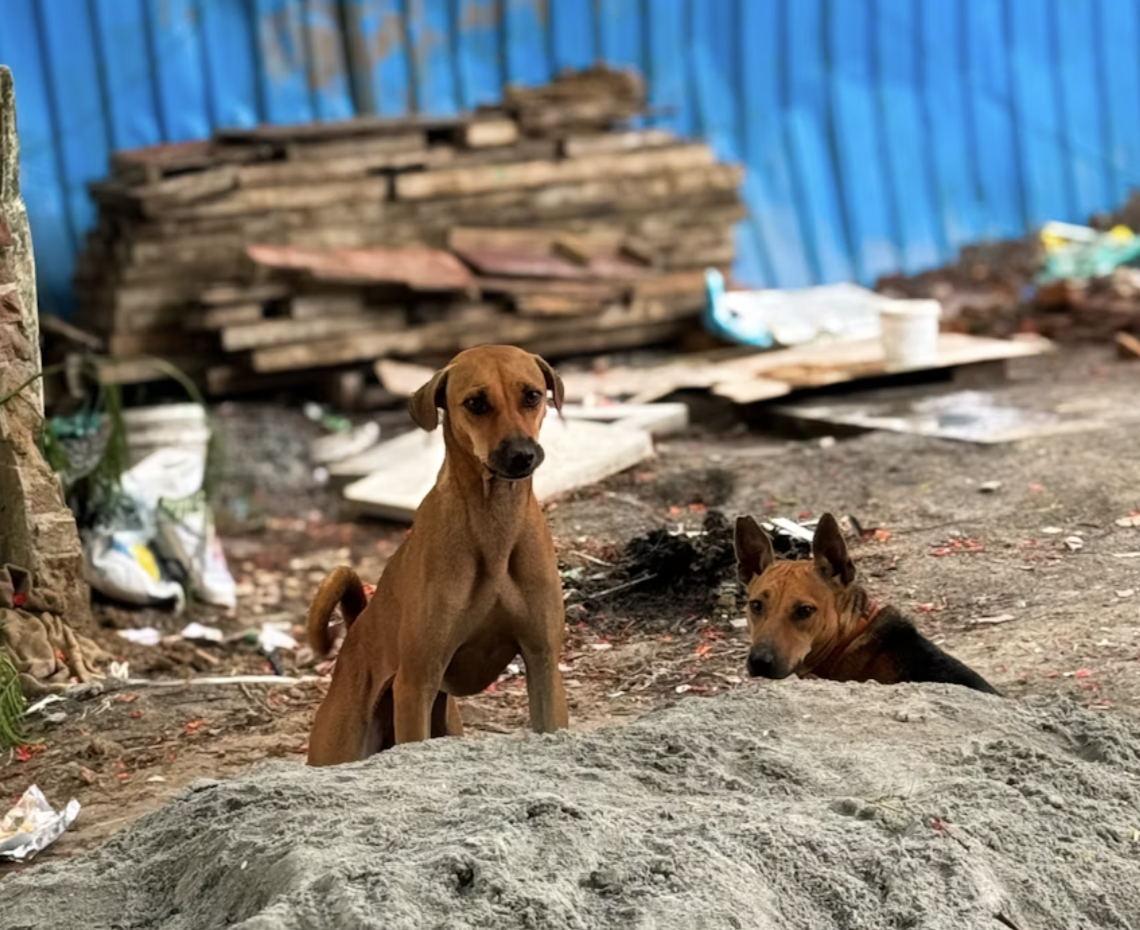
Why Community Dogs Deserve Humane Care—and Why Local Organizations Need More Support
We are all human, yet we can still be humane.
Every dog deserves food today, care when sick, and a future not defined by the street.
At dawn, a dog may wait outside the same market stall where someone occasionally leaves scraps of food. By midday, she may move between traffic, searching for shade, water, or a place to rest without being chased away. At night, she may return to a doorway, empty lot, construction site, beach, or space beneath a building—anywhere that offers a little safety.
Perhaps people in the neighborhood know her. Perhaps they call her by a name. A shopkeeper may leave out water. A family may share food. A local caregiver may look for her each morning.
But familiarity is not the same as safety.
A dog can be seen every day and still be hungry. She can be known by name and still have an untreated wound. She can receive occasional food and still have no dependable water, veterinary care, shelter, or protection from another litter being born into the same uncertainty.
Across Latin America and around the world, community and street dogs live near markets, neighborhoods, restaurants, roadsides, farms, bus stations, and beaches. Some are lost. Some were abandoned. Some are owned but allowed to roam. Some are informally cared for by several people. Others have no dependable caregiver at all.
Their circumstances differ. Their need for humane treatment does not.
No Dog Forgotten is a Network for Ecology campaign about helping people recognize those differences, support humane and practical solutions, and strengthen the local organizations and caregivers already working to protect dogs in need.
Street Dogs Are Not Scenery
A dog living outdoors is not simply part of the landscape.
She is an individual animal with hunger, fear, pain, habits, relationships, and needs. She may recognize the person who sets down a bowl of water. She may have puppies hidden beneath a building. She may be recovering from an injury that no one has been able to afford to treat.
Some dogs are friendly but frightened. Others are wary of people. Some once belonged to a family. Others are community dogs—animals known and informally cared for by local residents, but without one person able to provide everything they need.
The distinctions matter.
“Street dog,” “free-roaming dog,” “stray dog,” and “community dog” do not always describe the same situation. A roaming dog may be unowned, lost, owned and allowed to wander, or collectively cared for by a neighborhood. Responsible help begins with understanding the dog’s actual circumstances, rather than assuming every animal outdoors needs the same response. Humane dog-population guidance emphasizes assessing local conditions and tailoring interventions to the dogs and communities involved.
A lost dog may need reunification. An injured dog may need emergency treatment. A dog living safely with neighborhood caregivers may need dependable food, vaccination, sterilization, and veterinary care rather than immediate removal.
Whether a dog has one guardian, several informal caregivers, or no dependable support, she deserves humane treatment.
No dog should be left hungry, untreated, or forgotten simply because they live on the street.
Our Shared History
Long before dogs waited outside markets or slept beside roads, their ancestors began a remarkable journey alongside ours.
Dogs descended from ancient wolf populations and became the first animals humans domesticated. Archaeological evidence shows that dogs and people have lived in close relationship for thousands of years, and researchers continue to study exactly where and how domestication began.
What began as proximity became something extraordinary. Dogs accompanied people as communities moved, hunted, settled, and changed. They became hunting partners, guardians, herders, and companions.
But a dog’s worth cannot be measured only by what the animal does for us.
There is also the familiar greeting, the quiet presence beside a chair, the walk that draws someone outside, and the animal who makes an ordinary room feel less empty. For many people, a dog becomes part of the rhythm of being alive.
Yet dogs do not have to be useful to deserve kindness.
The dog who has never guarded a home, retrieved anything, or belonged to a family still deserves food, relief from pain, and humane treatment. So does the frightened dog who cannot yet trust a hand. So does the older dog whose recovery may take time.
We often praise dogs for loyalty. But the deeper question is not whether dogs are loyal enough to us.
It is whether we are willing to be dependable enough for them.
Compassion Needs a System
The scale of suffering can feel overwhelming. It can be easier to keep walking—to tell ourselves the problem is too large, too complicated, or too far away to change.
But the answer is not to look away.
Nor is the answer to assume that nothing is being done.
Local animal-welfare organizations, rescue volunteers, veterinarians, foster networks, and community caregivers are already turning compassion into action. They provide food and water, treat injuries, organize sterilization clinics, vaccinate animals, arrange foster homes, support adoptions, and educate neighbors.
They are not merely responding to heartbreaking situations. They are building pathways toward more dependable, humane care.
Many caregivers already give more than they can comfortably afford. They share food, arrange transportation, make room for recovering animals, pay veterinary bills, and spend evenings searching for help. They may live in communities where food, transportation, veterinary services, foster homes, and public funding are all limited.
The failure is not always an absence of compassion.
Often, it is the absence of a dependable system that allows compassion to become care.
No Dog Forgotten is an invitation to strengthen that system: to notice the dog and the caregiver; to see the injury and the missing veterinary resources; to recognize the unwanted litter and the barriers to sterilization.
Caregivers deserve more than admiration for their sacrifice. They deserve support that makes less sacrifice necessary.
Food Is Urgent—But Care Must Go Further
Food and clean water matter because hunger cannot wait for a perfect system. An injured dog cannot survive on public awareness alone. A thirsty dog cannot wait for a long-term strategy to take shape.
This is why No Dog Goes Hungry is an important part of the larger No Dog Forgotten campaign. It can focus public support on food and clean water for dogs in need.
But food alone cannot treat an injury, prevent disease, reduce future unwanted litters, or create a path to safety and a permanent home.
A humane, locally appropriate response may include:
- Dependable food and clean water
- Veterinary examinations and urgent treatment
- Care for wounds, parasites, mange, infection, and illness
- Sterilization and vaccination
- Safe recovery space after treatment or surgery
- Identification and reunification for lost dogs
- Foster care and adoption when appropriate
- Support for families and community caregivers
- Education that reduces abandonment and supports responsible guardianship
- Coordination with veterinary, municipal, and public-health services
The strongest approaches help animals in crisis while reducing the number of animals entering crisis.
Sterilization Is Prevention
One of the most compassionate interventions may happen before another litter is born.
Sterilization does not replace food, treatment, vaccination, education, or responsible guardianship. It must be performed safely by qualified veterinary professionals, with appropriate recovery care.
But it is an essential tool for reducing births into conditions where puppies may face hunger, illness, abandonment, and danger.
The goal is not simply fewer dogs in view. It is fewer dogs born into avoidable suffering—and better lives for the animals already here.
That requires accessible services, sustained veterinary capacity, community participation, and support that continues after the photographs from a clinic day have been shared.
Vaccination Protects Dogs and People
Humane dog care is also a public-health issue.
Vaccination protects dogs and helps protect people. The World Health Organization identifies mass dog vaccination as a central way to prevent human rabies by interrupting transmission at its source; dogs account for the great majority of human rabies cases worldwide.
This is not a reason to fear every dog outdoors. It is a reason to invest in prevention, veterinary access, education, and coordinated public-health work.
Compassion and public health are not competing goals. Humane, well-designed programs strengthen both.
Humane Solutions Address Real Concerns
Communities may face real concerns about bites, traffic, disease, livestock, wildlife, and public safety. Those concerns deserve thoughtful, practical responses. Ignoring them will not help dogs or people.
But urgency must not become an excuse for cruelty.
Humane dog-population management addresses risks while seeking to minimize harm. It can include vaccination, sterilization, veterinary care, responsible guardianship, public education, appropriate foster and adoption pathways, and coordination with local authorities.
The goal is not to treat vulnerable animals as disposable. It is to create safer communities for people and dogs alike.
Local Knowledge Must Lead
The people closest to the dogs should help shape the work.
A locally rooted organization understands realities that outside supporters may not see: veterinary availability, food costs, transport barriers, municipal policies, shelter capacity, neighborhood relationships, and risks to both animals and caregivers.
They may know which dog can remain safely in community care and which needs urgent intervention. They may understand whether the greatest need is medicine, sterilization, food, transport, foster space, adoption outreach, or a reliable water source.
Responsible partnerships begin with questions:
- What are local caregivers already doing?
- Which animals are most vulnerable?
- What resources are most urgently needed?
- What veterinary services actually exist?
- What is safe to document publicly?
- What would make the work more sustainable six months or a year from now?
Outside funding, storytelling, supplies, and business relationships can help.
But they should strengthen local capacity—not replace local judgment.
Behind Every Rescue
An emergency rescue is often the beginning of a dog’s recovery—not the end.
After the photograph comes the veterinary examination. After surgery come medication, follow-up appointments, a safe place to rest, food, transport, and someone who checks whether the animal is healing.
A foster home may provide daily support for weeks or months. An adoption may require screening, travel arrangements, paperwork, and patient transition support. Other dogs may remain in locally appropriate community care, with caregivers helping coordinate food, water, vaccination, sterilization, and veterinary attention.
These ordinary costs make responsible care possible:
- Food
- Medicine
- Fuel and transport
- Veterinary appointments
- Temporary recovery space
- Foster support
- Sterilization and vaccination
- Communication and recordkeeping
- Staff and volunteer time
They may not always create dramatic stories, but they are the foundation of humane care.
How People Can Help
You do not have to run a shelter to become part of a humane solution.
- Support a credible local organization through its official channels.
- Consider recurring support if you can; predictable funding helps organizations plan.
- Ask what is most needed before donating food, supplies, or services.
- Support prevention as well as emergency rescue, including sterilization, vaccination, education, and veterinary access.
- Foster or adopt only when you can make a responsible, long-term commitment.
- Offer useful skills such as photography, translation, bookkeeping, web support, writing, transport coordination, or donor communication.
- Share verified adoption, foster, and volunteer opportunities.
- Introduce a veterinary clinic, pet business, hotel, restaurant, or other local business that may be able to help.
- Stay engaged after an urgent story fades; recovery and prevention continue long after public attention moves on.
The most useful contribution is not always the most visible one. It is the contribution that meets a real need and helps the work continue.
What Businesses Can Do
A Simple Way to Make a Difference
Businesses do not need to become animal shelters to make a meaningful difference.
A business can choose one simple way to contribute:
- Make a direct gift through a nonprofit’s official donation channel.
- Host a flyer or QR code that helps customers learn about an organization’s work.
- Collect requested food or supplies for a local rescue or community-dog program.
- Share verified adoption, foster, or volunteer opportunities with customers.
- Support a specific need, such as food, vaccinations, sterilization, or veterinary care.
- Match customer or employee donations, if the business chooses to offer that.
- Share the story of support it has already made, with clear and accurate language.
Your business can make a real contribution—without turning it into another project.
Visibility Can Become Care
A photograph cannot heal an infection. An article cannot perform surgery. A social-media post cannot replace clean water.
But visibility can help make care possible.
An honest story can introduce a rescue to a recurring donor. Adoption outreach can help a suitable family find a dog. A business relationship can help fund a veterinary clinic day. Clear updates can help supporters understand why food, medicine, recovery space, and long-term prevention all matter.
The pathway is straightforward:
The work begins on the ground: a caregiver notices the dog, a veterinarian assesses an injury, a volunteer arranges transport, and a foster family opens a door.
Storytelling should honor that reality. It should not turn suffering into spectacle, exaggerate outcomes, imply partnerships that do not exist, or expose animals and caregivers to unnecessary risk.
Ethical storytelling helps people see not only the dog in need, but also the local expertise and commitment already responding.
What Network for Ecology Is Building
Network for Ecology is not a shelter, rescue organization, veterinary provider, or animal-control authority.
We are a exploring ways to help credible, locally led organizations become more visible, understandable, and easier for people and businesses to support.
This article is a starting point—not the announcement of an active animal-care program, formal rescue partnership, or fundraising relationship.
Over time, No Dog Forgotten may include:
- Reporting on locally led community-dog programs
- Public education about humane care and responsible guardianship
- Partner-approved interviews, photography, videos, and updates
- Introductions to potential supporters and mission-aligned businesses
- Communications support that helps organizations reach new audiences
- Future partner-approved campaigns directing people to official donation channels
Our role is help more people recognize its value and find responsible ways to support it.
Any future partner should retain authority over animal-care decisions, programs, funds, donor relationships, records, and data.
The Promise Behind the Name
No Dog Forgotten is not a promise that one person or organization can rescue every dog.
It is a commitment to a different principle: every dog matters; people already caring for animals deserve support; and compassion becomes stronger when it is organized around local knowledge and sustained responsibility.
The dog outside the market is not background scenery.
The mother beneath the building is not disposable.
The frightened animal who cannot yet approach a person still deserves care.
The volunteer carrying food should not have to carry the whole burden alone.
Dogs have lived beside us for thousands of years. Some now sleep safely in our homes. Others sleep outside our doors.
Their circumstances are different.
Their need for humane treatment is not.
We answer the question—have we forgotten our friends?—not only with what we feel, but with what we choose to do next.
We can notice. We can listen. We can support the organizations already leading the way. And we can help make care more dependable for the next dog who needs it.
One dog. One caregiver. One community. One act of compassion at a time.
Stay Connected
No Dog Forgotten is part of Network for Ecology’s broader vision of connecting people, stories, businesses, and trusted organizations around practical ways to care for communities and the living world.