

In the depths of our oceans lie hidden treasures—vibrant underwater jungles of brown algae known as kelp forests. While coral reefs often steal the spotlight, these marine sanctuaries are among Earth’s most breathtaking and productive ecosystems. Yet, despite their vital role in supporting millions of species and people alike, kelp forests are vanishing at an alarming rate worldwide. Rising sea temperatures, overgrazing, overfishing, and pollution are all contributing to their decline. However, amidst the bleak landscape, a glimmer of hope emerges.
Marine ecologists from UNSW Sydney have embarked on an ambitious journey to piece together the untold history of kelp forest management around the globe. Their groundbreaking findings promise to illuminate a path towards revival for these precious ecosystems.
“It’s like a beautiful rainforest, but underwater. Kelp forests are hubs of biodiversity, capturing carbon and providing habitats for countless species,” explains Professor Adriana Vergés, a marine ecologist from UNSW Sydney.
In a recent milestone, scientists completed the first comprehensive review of kelp forest restoration efforts worldwide. This groundbreaking study chronicles the lessons learned from 260 restoration projects spanning 300 years, 16 countries, and five languages. According to Aaron Eger, lead author of the study and a Scientia PhD candidate at the School of Biological, Earth and Environmental Sciences, the results offer a beacon of hope amidst the challenges.
“We found true success stories from all around the world, showing that restoration is an achievable goal. It’s been costly and mostly small-scale, but it’s possible to reverse the environmental damages,” says Mr. Eger.
The research, published in Biological Reviews, not only sheds light on past restoration efforts but also paves the way for future endeavors. By mapping the evolution of kelp forest restoration practices, scientists hope to refine best practices and accelerate progress in safeguarding these vital ecosystems.
Discovering Kelp Forests, A Treasure Beneath the Waves
Beneath the temperate and arctic seas, kelp forests thrive, creating lush underwater landscapes teeming with life. Within these majestic forests, a bustling community flourishes—sea birds soar overhead, otters play among the fronds, and an array of marine species call this habitat home.
The benefits of kelp forests extend far beyond their borders. These underwater wonders draw carbon from the atmosphere, exude oxygen, reduce storm damage, enhance water quality, and beckon adventurers to explore their depths. Yet, as sea temperatures rise and human impacts intensify, kelp forests are facing unprecedented threats.
Southern Australia and Northern California have witnessed the devastation firsthand, with giant and bull kelp forests declining by as much as 95%. Similar declines have occurred on every continent, signaling a global crisis. But amidst the challenges, conservation efforts are underway.
Kelp Forests FAQs
Kelp forests are dense underwater habitats primarily composed of large brown seaweeds, thriving in cold, nutrient-rich waters and serving as vital ecosystems teeming with marine life. These forests provide habitats for thousands of species, offer a valuable food source, are among the fastest-growing organisms on the planet, and help maintain water clarity.
They are found along over one-third of the world’s coastlines, hosting a diverse community including sea otters, seals, fish, sharks, crabs, starfish, and whales. However, kelp forests face threats from rising sea temperatures, ocean acidification, pollution, and overfishing. Sea otters play a crucial role in maintaining kelp forest health by controlling sea urchin populations, this is known as trophic cascade.
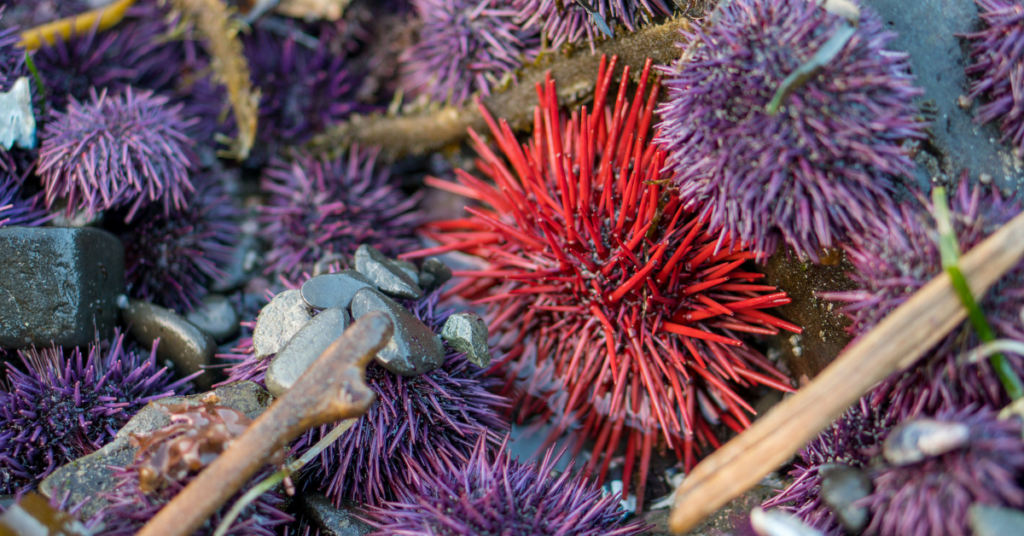
Picture of a sea urchin.
Conservation efforts led by the Kelp Forest Alliance aim to protect and restore these habitats through marine reserves and sustainable practices. Kelps can grow up to 18 inches a day and can reach heights of over 150 feet, making them the second fastest-growing organisms on Earth.
You can explore kelp forests through diving and snorkeling tours, experiencing the magical world beneath the waves.
Joining Forces, The Kelp Forest Alliance
In response to the looming threat, the Kelp Forest Alliance has emerged—a coalition of organizations and governmental bodies dedicated to protecting and restoring kelp forests worldwide. Through marine reserves, sustainable fishing practices, and collaborative restoration projects, the alliance strives to safeguard these vital marine ecosystems.
However, the journey towards kelp forest restoration is not without its challenges. Rising sea temperatures, ocean acidification, pollution, and overfishing continue to pose formidable obstacles. Yet, as Professor Vergés emphasizes, the urgency of action cannot be overstated.
How You Can Help
In the fight to save our kelp forests, every action counts. Whether supporting sustainable fishing practices, reducing your carbon footprint, or advocating for marine protected areas, there are countless ways to make a difference. By raising awareness and sharing the beauty of kelp forests with others, we can ignite a global movement to protect our oceans and the precious ecosystems within them.
As the sun sets on the horizon, casting a golden glow upon the waves, let us join hands in a collective effort to restore and protect our underwater forests. For in their depths lie the secrets of our past, the wonders of our present, and the hope of our future. Together, let us ensure that our kelp forests thrive for generations to come.
*Restore and protect our kelp forests. Donate to the Kelp Forest Alliance today.*