

What our deepest teachings reveal to us—and how understanding can become care
A garden passage. A yogic teaching. An Onondaga account of giving thanks. These are not interchangeable expressions of one belief. Each offers a particular place to begin thinking about how we live among other lives.
A tree can be shade beside a building. It can also be something we have accepted responsibility for: a living presence we water, protect, and hope will outlast us.
A river can appear on a map. It can also belong to a community’s history, daily life, and sense of obligation.
An animal can pass through our attention in a moment. Whether we continue to notice its needs is another matter.
Creation Care begins with that movement—from seeing a living world around us to considering what our relationship with it asks of us.
For some people, the question opens through scripture. For others, through oral teachings, spiritual practice, inherited responsibilities, or a community’s relationship with its homeland.
For others, that connection is felt most clearly in the natural world itself: watching the sun set, seeing animals play in the forest, or feeling a breeze move across their skin. It may not have a religious name or come from a sacred text. It is simply a sense of belonging—a feeling of being part of something larger, and wanting to care for the life around us.
These experiences do not have to be the same to open a meaningful conversation.
Creation Care makes room for different ways of finding connection—and asks how that connection can become care.
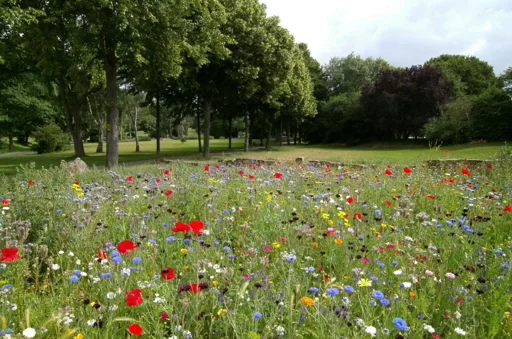
A garden entrusted to care
A garden is more than a place to enjoy. It is a living place to tend.
In Genesis 2:15, God places the human in the garden of Eden “to till it and keep it,” in the wording reproduced by Yale’s Forum on Religion and Ecology. The garden is already growing before the human receives this task. Human work begins within a living world, with a responsibility to cultivate and keep it.
For Creation Care, that image opens a question: what changes when we approach a place not only for what it offers us, but also for what it asks of us?
Psalm 104 broadens the view beyond the garden. Springs quench the thirst of wild animals. Birds sing beside streams and nest in trees. Mountains provide homes for wild goats, while the sea holds creatures both small and great. People go out to their work within this wider scene of life sustained by God.
Read alongside the garden passage, this poetry invites us to notice that a place is never merely a backdrop for human activity. It is also another creature’s shelter, a source of water, or somewhere to feed and raise young. Our needs matter, but they are not the only needs present.
These passages belong to rich traditions of faith and interpretation, not to a ready-made environmental slogan. As Yale’s resource cautions, isolated verses cannot represent the full range of biblical teachings or the ways communities understand them. Reading carefully means allowing the texts to challenge our assumptions, rather than simply confirm what we already believe.
For this campaign, the garden offers a starting point for reflection: care involves both receiving and responding. We benefit from a place, and we ask what responsibility comes with that benefit.
That response can take an everyday form: tending a shared garden, leaving room for wildlife, or helping protect a waterway. These are present-day ways of exploring the question the passage brings into view: how will we care for the living places entrusted to us?
Seeing the sacred in other lives
What changes when we look at another living being and see more than something separate from ourselves?
In the Bhagavad Gita, chapter 6, verse 29 explores a way of seeing shaped by meditation and spiritual understanding. In Swami Bhoomananda Tirtha’s translation, the yogi perceives the Self in all beings and all beings in the Self. Here, “Self” refers to spiritual reality, not simply our individual personality or preferences.
A. C. Bhaktivedanta Swami Prabhupada’s translation expresses the teaching through divine presence: the realized person sees the Supreme Lord in every being. His commentary extends that vision across outward differences, describing divine presence in both a dog and a learned person, a believer and a nonbeliever.
These interpretations have distinct spiritual meanings. Yet each challenges a way of looking that notices only outward differences and overlooks a deeper significance within other lives.
For Creation Care, that opens a question: what might change in our behavior if another creature’s worth did not depend on its usefulness to us?
An animal would be more than a passing attraction. A living landscape would be more than a collection of resources. Care could begin with recognizing that our immediate wants are not the only things that matter.
This is a reflection prompted by the teaching, rather than a claim that the verse prescribes a particular conservation practice. Its setting is spiritual realization; the practical question we bring to it is how a changed way of seeing might influence a changed way of living.
From that question, care can become something concrete: greater attention to an animal’s needs, restraint in what we take, or a continuing commitment to the places that sustain other lives.
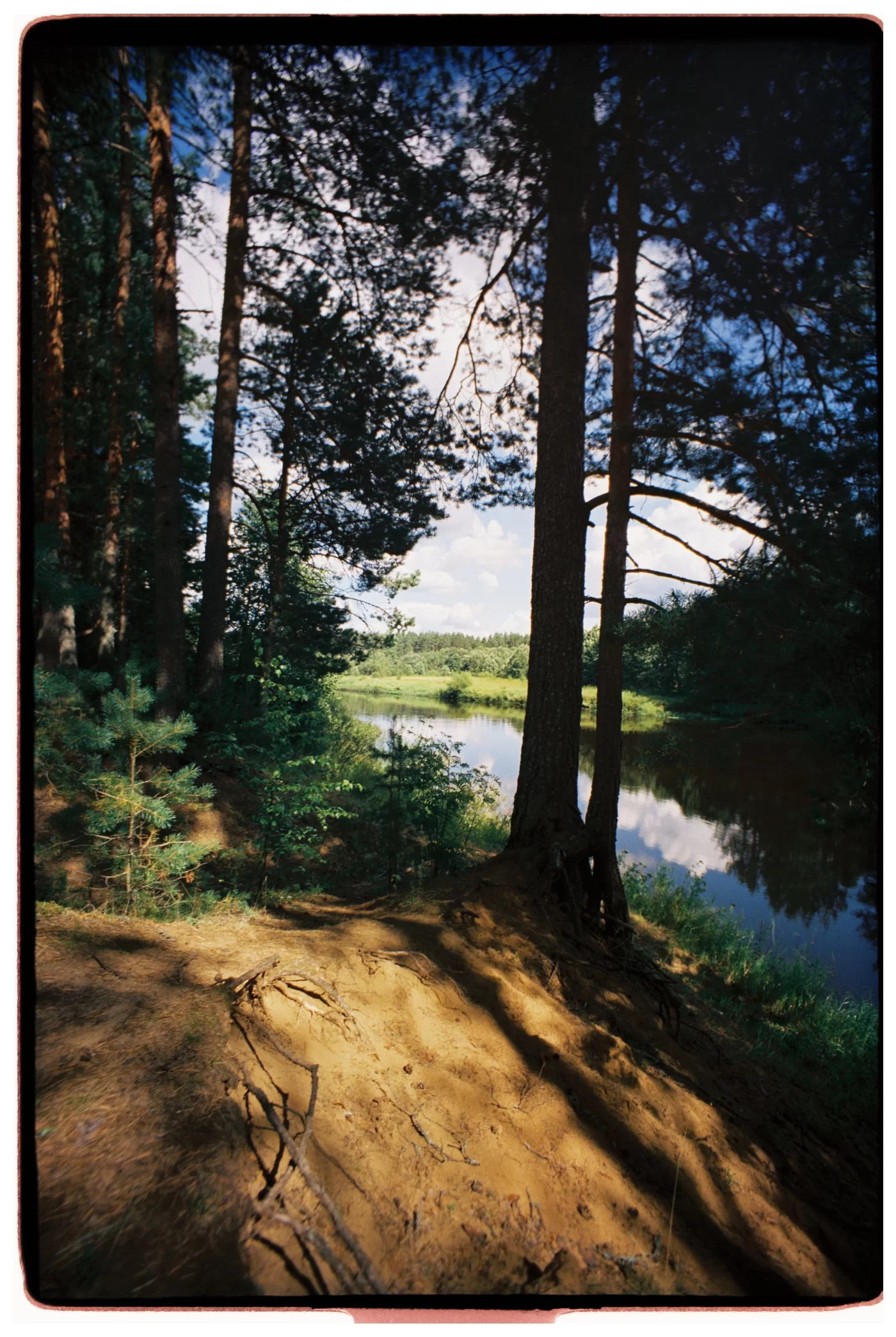
Giving thanks to a world of relationships
The Onondaga Nation offers a public explanation of Ganoñhéñ- nyoñ’, or the Thanksgiving Address, in its own account of its culture.
The Nation describes beginning gatherings, meetings, and ceremonies by giving thanks. A speaker acknowledges the people and, in their own words, the gifts and relationships of the wider world: Earth, grasses, medicines, trees, foods, animals, birds, waters, winds, and other presences, continuing toward the Creator. Its explanation describes the purpose as bringing minds together in thanks and acknowledging the collectiveness of the world in its public account of Onondaga culture.
This is not an anonymous saying about loving nature. It belongs to a particular living people and context.
Nor is it an invitation for an outside publication to turn a ceremonial practice into an exercise for readers to reproduce.
We can instead attend to what the Nation has chosen to explain publicly: gratitude is directed toward a world containing many relationships, not only toward the immediate interests of the people gathered.
That gives an outside reader a question to consider without claiming the teaching as their own: what disappears from our decisions when we fail to acknowledge the lives and relationships that sustain us?
Living knowledge is not confined to the past
Indigenous teachings are too often introduced as something people once knew.
That framing can overlook what communities continue to practice, defend, and renew.
The Indigenous Environmental Network describes its work in the present: protecting sacred sites, land, water, air, community health, and other living things; supporting Indigenous communities and tribal governments; involving youth and elders; and defending cultural and spiritual rights.
Here, spiritual relationships are not separated from pollution, policy, livelihoods, or the ability of a people to determine what happens in its homeland.
This matters for Creation Care.
We cannot celebrate an account of sacred relationship while looking away from the people and responsibilities that sustain it.
Nor can one Indigenous account represent thousands of distinct societies. John Grim’s overview of Indigenous lifeways emphasizes the diversity of languages, histories, kinship systems, and homelands—and the problems created by treating them as one generalized religion.
Our work is to learn from particular accounts, with their sources and boundaries intact.
Jesus: noticing creatures and responding to need
In the Gospels, Jesus speaks of lifting a sheep from a pit and leading an ox or donkey to water, even on the Sabbath. He uses these examples to defend healing people, treating necessary animal care as a responsibility his listeners already recognize. These are teachings about rescue and care, not accounts of Jesus personally rescuing an animal. The distinction matters. See Matthew 12:11 and Luke 13:15.
Elsewhere, he asks people to notice birds and flowers, and says that not one sparrow is forgotten by God. His immediate concern is human trust and anxiety, and he gives human beings greater value than birds. Yet other creatures are not outside divine attention. For a Christian reader, these teachings can connect responsibility with a habit of noticing lives and needs that might otherwise pass unseen.
Sivananda: spiritual vision in a small act of care
A recollection about Swami Sivananda brings the earlier discussion of spiritual perception down to the scale of a single insect. In “The All-Compassionate Siva,” Swami Krishnananda recounts how Sivananda found a wasp shivering and struggling for life one winter day. He warmed it in sunlight, gently patted it dry, and placed sugar before it. After some time, the wasp could move its wet wings.
The account, identified as coming from a 1948 issue of The Divine Life magazine, explains that Sivananda felt the wasp, too, was Lord Narayana. It also describes him providing water for birds and gently removing insects from vessels of water. This is a devotional recollection, not an independently verified modern case study. Its meaning within that setting is clear: compassion is part of spiritual practice, not a distraction from it. Seeing oneness should change how a person responds to suffering.
Francis and Ashoka: kinship and public responsibility
Francis of Assisi’s Canticle of the Creatures praises God through Brother Sun, Sister Water, and Sister Mother Earth, who sustains us and brings forth fruits, flowers, and herbs. Its language places human life within a family of creation. This is Christian praise addressed to a Creator, not a claim that every creature is God. Its invitation is to receive the world with gratitude and humility rather than regard it only as a possession.
A different kind of evidence appears in the edicts of the Buddhist ruler Ashoka. He was a ruler rather than a monastic teacher, and his inscriptions show ethical concern entering public policy. Pillar Edict 5 names protected animals, protects certain mothers and young, and prohibits burning forests without reason or to kill creatures. These were selective protections, not a universal ban on killing. They nevertheless move the discussion beyond personal kindness: responsibility can also take the form of rules that restrain harm.
Schweitzer and Leopold: widening the boundaries of ethics
Albert Schweitzer’s ethic of reverence for life asks people to recognize in other lives the same striving to live that they experience in themselves. His examples include helping an insect out of a puddle. Importantly, he acknowledges that living requires choices in which life is harmed. Reverence does not remove that conflict; it requires us to question whether harm is necessary and avoid going beyond the unavoidable.
Aldo Leopold’s land ethic widens the focus from individual beings to the community of soils, waters, plants, and animals. People belong within that community rather than standing outside it as conquerors. This adds a necessary dimension to individual acts of rescue: caring for a creature also calls attention to the habitat and relationships that allow its life to flourish.
These approaches do not always give the same answer. Protecting an ecological community can involve difficult choices about individual lives. Devotion, reverence for life, and ecological responsibility cannot simply be substituted for one another. Together, they give us more searching questions: whose needs have we overlooked, what harm can we avoid, and what must we sustain beyond the immediate moment?
Understanding does not require sameness
The garden passage, the Bhagavad Gita verse, and the Onondaga account are different in origin, form, and meaning.
They do not establish one shared theology.
They do offer different openings for reflection: on responsibility, spiritual perception, gratitude, and relationships beyond ourselves.
Creation Care will follow those openings through particular texts and people. Some stories will remain close to a passage. Others will explore a place, a community decision, or the work involved in keeping a commitment.
The aim is not to gather enough quotations to make every tradition agree.
It is to understand more deeply—and then ask what that understanding might require of us.
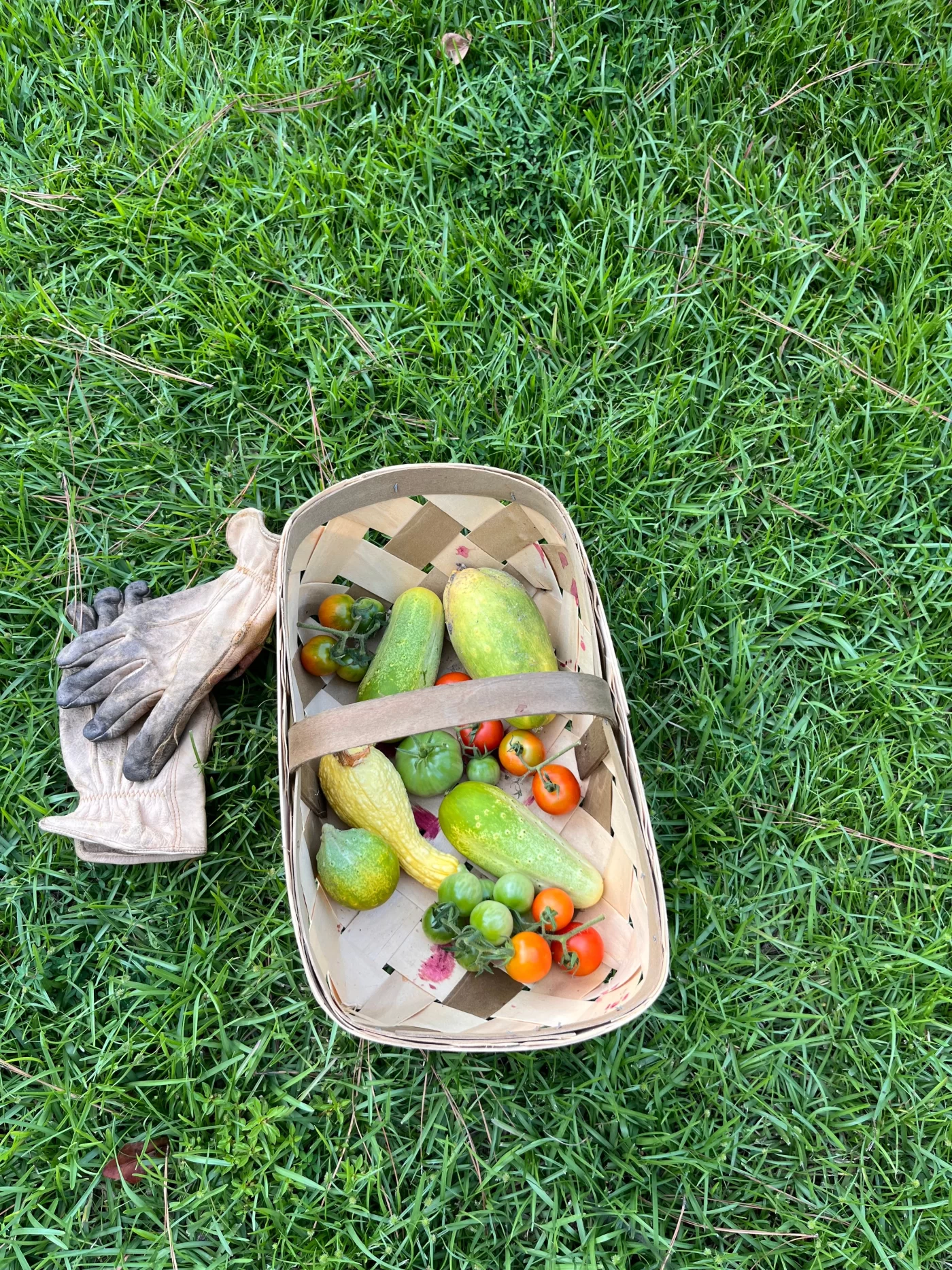
When intention meets practical support
A person may feel strongly that a place deserves care and still need help deciding what to do.
Knowledge, money, time, permission, and maintenance all matter.
Minnesota’s Lawns to Legumes offers one practical example of support: resources and assistance for residential pollinator-friendly planting. Its organizational Pollinator Pathways program supports collaborative habitat work through a different route. Neither is a religious program; both are relevant to the practical question of how people move from interest toward action.
BWSR’s Pollinator Pathways project list includes Como Community Council’s Bee Line and Beyond, the Midtown Greenway Pollinator Pathway, and the Prairie Island Indian Community’s Dakota Circle Native Perimeter Garden. These listings establish funded projects—not the participants’ spiritual motivations, which would require their own accounts.
The distinction is important. We should not assign a belief to people because we admire their work.
We can recognize that meaningful care often needs a structure around it: people who know the place, appropriate guidance, shared responsibilities, and someone who returns.
Begin with a question—and follow it into care
You do not need to share every belief explored here to take part in the conversation.
You might begin by reading a text in context. Listening to a community’s own account. Learning whose knowledge and responsibilities are connected with a place.
Then consider a practical question:
What is one useful contribution I could make?
It might be helping an existing project rather than starting another. Offering time to maintain a garden. Joining an invited community activity. Supporting people protecting water or habitat. Bringing the people responsible for a shared place into a thoughtful conversation.
The next step need not be grand. It should be real enough to carry through.
Creation Care is an invitation to make room for deeper understanding—and to let that understanding become something we continue to do.
Many traditions. A living Earth. Continuing care.
Featured photograph: Jean Gc / Pexels.