
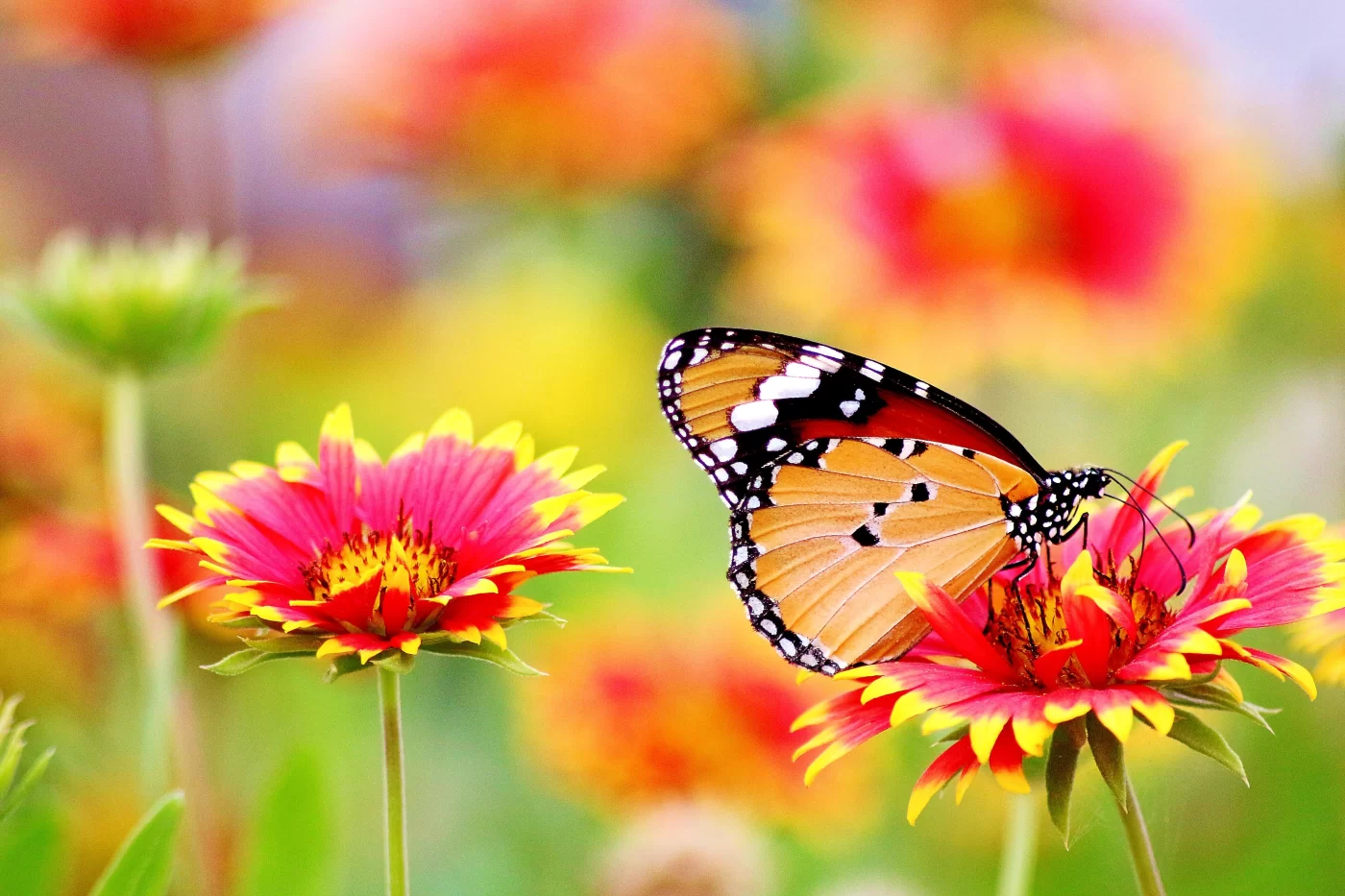
A butterfly on a flower offers a glimpse of what an ordinary place can become: somewhere other life can find a home.
A corner of your yard. A garden outside a school. A planting beside the building where you work. These familiar spaces can be more than a backdrop to our lives.
They can make room for other lives, too.
The butterfly draws our attention, but its story reaches beyond the bloom. Before it could fly, it needed a plant its caterpillar could eat. Its next generation will need somewhere to begin. What looks like a brief visit is part of a life connected to the landscape around it.
That is the idea behind Room for Nature, a Network for Ecology campaign encouraging people to bring native plants and wildlife habitat into the places we live, learn, work, worship, and gather.
The goal is not simply to attract wildlife for a moment. It is to help create places that support it over time.
We can begin with one place—and one practical change that makes more room for life.
Look beyond the butterfly
The butterfly is the part we notice.
Yet nectar is only part of the story. Caterpillars need suitable host plants, and different insects need different places to nest, shelter, or complete their development. Homegrown National Park’s habitat guidance brings these less-visible needs into view.
That changes the question we ask of a landscape.
Instead of only asking, “Does this look beautiful?” we can also ask, “What can live here?”
Imagine the places between
Picture a neighborhood differently.
A garden beside a home. A planting outside a school. Native trees on a congregation’s grounds. A workplace where someone begins asking what else the landscape could support.
Now imagine people noticing these places in relation to one another—not only as separate properties, but as opportunities to make more room for life across a neighborhood.
This is part of the vision behind Homegrown National Park: restoring native habitat where people live and work, beyond the boundaries of the protected places we already treasure. Its invitation includes homes, schools, businesses, farms, and places of worship.
These spaces do not become official national parks. Nor does planting a garden automatically establish a functioning wildlife corridor. The invitation is to look beyond a property line and consider how care in one place might complement care nearby.
Plants are part of a living relationship
Native plants are central to this conversation because of their relationships with the life of a particular region.
Homegrown National Park’s native-plant education explains how plant–insect relationships help sustain wider food webs, including birds that feed on caterpillars.
“Native” is therefore more than a label on a plant. It invites another question: native to where?
The answer needs to connect with the region and the site—not simply a photograph of an appealing garden elsewhere. The organization’s landscape-design guidance recommends regionally native plants matched to light, water, and soil conditions.
We do not need every garden to become identical. We need to understand the places we are caring for.
You do not have to change everything
Making room for nature does not have to begin with removing an entire lawn.
National Wildlife Federation’s “Cues of Care” guidance describes phased changes and intentional design. Native plantings can welcome wildlife while looking deliberately cared for; simply stopping mowing is not the same as creating a native garden.
A beginning might be one bed, a border, or a suitable container. Homegrown National Park welcomes contributions ranging from a native plant in a container to much larger habitats.
Choose a scale you can care for. Learn what suits the place. Let experience shape what happens next.
A place to live, not only somewhere to visit
Pollinator care reaches beyond providing flowers.
The Xerces Society’s pollinator-conservation resources connect flowering plants with nesting sites, pesticide avoidance, and sharing knowledge.
There is a useful shift in that approach. We are not simply trying to attract something long enough to photograph it. We are considering what would help it live.
Some habitat features may be less showy than a summer flower bed. Homegrown National Park describes the importance of leaf litter, suitable standing stems, and other nesting or pupation sites for different insects. Different species need different conditions.
Thoughtful care is not a call to leave every place unmanaged. It is an invitation to understand what our maintenance decisions remove, preserve, or make possible.
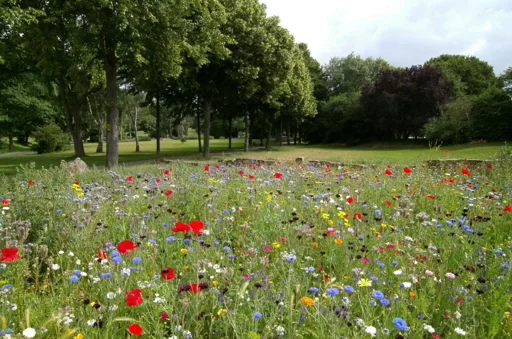
When the schoolyard becomes the lesson
A schoolyard offers a concrete example of how this vision can become a learning experience.
In Homegrown National Park’s published account of Symbiotic Schoolyard, educator Janneke Petersen describes the inspiration she found in a neglected, ivy-covered patch of school grounds. What if students could replace it with native plants—and make that work part of their science learning?
Petersen approached the Washington Native Plant Society. Its Youth Ecology Education through Restoration program brought native planting into Washington public schoolyards, with trained volunteers helping teachers select appropriate species and carry out the work. Petersen also developed Symbiotic Schoolyard, an ecosystem curriculum centered on students’ own school grounds.
The example matters for more than the planting. It connects a familiar place with learning, local expertise, and the people needed to put an idea into practice. The published account does not establish long-term ecological outcomes, and it is not an NFE interview or field report. Readers considering a similar approach should check current program details directly.
The vision is already taking shape
Homegrown National Park, cofounded by Doug Tallamy, encourages people to add native plants and remove invasive plants where they live, work, and gather.
Its Biodiversity Map gives participants in the United States and Canada a way to make their habitat contributions visible within a larger movement. Adding a site to the map makes participation visible; understanding its ecological results takes further observation.
The Xerces Society offers another route into the work through pollinator education and habitat resources, including regional plant lists and its Bee City USA and Bee Campus USA programs. Check each program’s current requirements and suitability directly.
NFE independently features Homegrown National Park, National Wildlife Federation, and the Xerces Society in this article. Inclusion does not announce an affiliation or formal partnership.
Start with a place you know
You do not have to begin by buying plants. Begin with a question.
At home: what already lives in this garden?
At a school: who cares for the grounds, and what would they want children to learn here?
At a workplace or congregation: is there interest in a small habitat-focused change—and who would care for it over time?
Before changing a shared place, bring its owners, users, and maintenance team into the conversation. Seek permission and advice appropriate to the site.
Your most useful contribution might be organizing a conversation, translating a resource, photographing seasonal changes with permission, or asking an existing initiative what support it needs.
Three ways to keep exploring
- Find native plants for your area. National Wildlife Federation’s Native Plant Finder uses a U.S. ZIP code to identify native host plants, ranked by the butterfly and moth species they support. Check suitability for your site before selecting plants.
- Explore Homegrown National Park’s Biodiversity Map. Learn how to register a contribution in the United States or Canada and see it in the context of a wider effort.
- Explore pollinator care with Xerces. Find regional guidance and learn about its Pollinator Protection Pledge. This is Xerces’ program, not an NFE pledge.
These are independent resources, not a guarantee of services or a substitute for qualified local advice.
Featured butterfly photograph: Pixabay / Pexels. Illustrative stock photograph, not a documented NFE project or a claim of regional plant nativity.
Help make room
As Room for Nature develops, NFE will explore the people and experiences behind this work: what they noticed, what they tried, what proved difficult, and what helped them continue.
We want to make room for the story after planting day.
You can learn, join an existing effort, offer a useful skill, or support an organization through its official channels. You can also introduce a story NFE should explore.
Support for NFE helps sustain our own research, storytelling, education, and outreach. It is separate from direct support for organizations featured in our coverage.
Return to that butterfly on the flower.
There is beauty in the encounter. There is also a larger possibility: a place understood more closely, cared for more thoughtfully, and shared with more than ourselves.
Explore Room for Nature to discover the campaign and find your way to participate.