
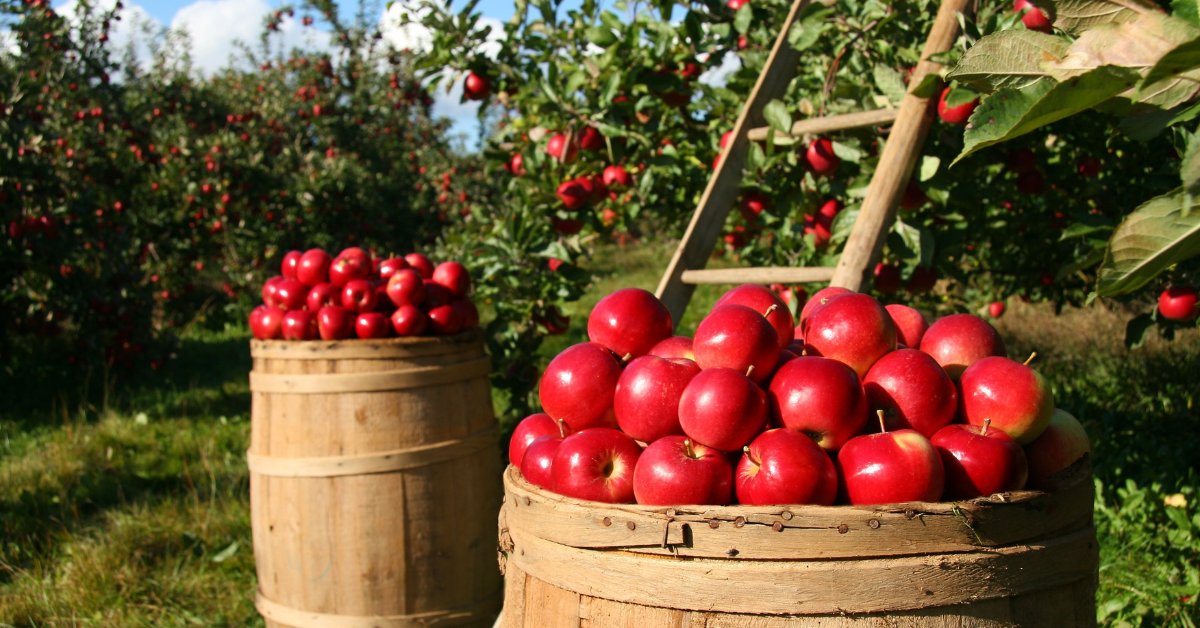
Imagine walking through a neighborhood where food is part of the landscape.
Fruit trees shade a gathering place. Berries grow along a community garden fence. Herbs fill the air near a shared kitchen. At a school, children watch the plants they have tended become something they can taste.
Neighbors meet beneath the branches of an orchard. Someone brings a basket. Someone brings a question. Someone who has been growing food for years shows a newcomer where to begin.
Imagine more places like this—not all the same, but each shaped by the people who live there.
Growing Eden is Network for Ecology’s invitation to explore that possibility: a world where growing food brings us into closer relationship with the earth, with one another, and with the life that nourishes us.
A world within a harvest
Hold a piece of fruit in your hand.
Before it reached you, it was part of a living plant, rooted in a particular place. Its story reaches into soil, water, weather, and the care that helped bring it to harvest.
Look closely, and food becomes more than a finished product. It becomes a way to notice the living world.
Agriculture depends on a remarkable diversity of life—not only crops, but also pollinators, soil organisms, and other species that help sustain growing systems.
Growing Eden will explore these connections through the lives and experiences of people who grow food.
What does a gardener notice after tending the same place for years? What does a farmer learn by watching the soil? What does a harvest mean to a family, a school, or a neighborhood?
There is beauty in what grows. There is also beauty in the attention people give it.
Many ways to grow
The vision can take many forms.
A backyard filled with vegetables and herbs. A community orchard. A food forest. A farm. A garden beside a school, congregation, or community center.
Growing Eden will explore:
- Food forests and community orchards.
- Permaculture and ecological garden design.
- Organic and biodynamic growing.
- Regenerative agriculture and agroecology.
- Agroforestry.
- Perennial vegetables, fruit and nut trees, herbs, and seasonal crops.
- Seed saving, soil care, and shared growing knowledge.
We want to introduce people to this world through stories, useful resources, and opportunities to learn from those doing the work.
Some readers may want to grow food themselves. Others may discover a community project they want to strengthen, a grower they want to learn from, or an initiative they want to support.
There are many places to begin.
The vision is already taking root
In Philadelphia, the Philadelphia Orchard Project works with community groups to plant and care for orchards across the city.
Its work includes design assistance, plant materials, and training. Community partners own, maintain, and harvest their orchards.
Here is an example of the larger vision taking shape: food growing in community spaces, with local people involved in its care.
But the story is more than the planting.
It includes the people learning to tend the trees, the plans for sharing the harvest, and the relationships that make continuing care possible. These responsibilities are part of the Philadelphia Orchard Project’s community-partner model.
Growing Eden will bring work like this into view.
We want to meet the people behind it, understand what they have learned, and help others discover where they might participate.
NFE independently features Philadelphia Orchard Project and is not affiliated with the organization.
Communities shaping their food futures
Growing food can also open a conversation about who gets to make decisions.
What do people want to grow? Which foods matter to them? Whose knowledge guides the work? Who has access to land, and how will the harvest be shared?
These questions connect Growing Eden with food sovereignty.
The Nyéléni food-sovereignty movement describes a vision in which people have access to healthy, culturally appropriate food and a voice in defining their own food and agricultural systems.
For Growing Eden, this means listening.
We want to feature communities working toward food systems that reflect their needs, knowledge, and values. Their priorities should shape their stories.
The invitation is not to arrive with a ready-made answer. It is to discover what people are building and ask how their work might be strengthened.
The people who keep things growing
A garden’s story does not end when it is planted.
Growing Eden will make room for the continuing work: returning to a place, learning its rhythms, sharing responsibilities, and passing knowledge to someone new.
We want to hear from the person who has tended a neighborhood garden for years. The educator helping children discover where food comes from. The grower trying something different. The volunteer learning a skill they never expected to enjoy.
These stories belong alongside the harvest photographs.
They help us see growing food as a relationship—something sustained through knowledge, patience, and care.
Find your way into the work
You do not need to own land or know how to garden to take part.
You can begin by discovering what is happening near you and finding a contribution that fits.
Learn from a grower
Visit a public garden, attend a workshop, or explore the resources of a growing initiative. Listen to what people have learned through experience.
Grow something
Explore a manageable beginning: herbs in a suitable container, a garden bed, or a place in a community growing project. Learn what will suit the space and what care it will need.
Share a skill
Ask an existing initiative what would help. Your contribution might involve organizing, writing, translation, photography, fundraising, or practical work.
Start a conversation
At a school, congregation, housing community, or neighborhood gathering, ask whether others are interested in growing food together. Learn what they would want from a shared space.
Strengthen an existing effort
Follow an initiative’s stated needs. Volunteer when invited, help share its resources, or contribute through its official support channels.
Participation does not have to begin with a large project. It can begin with one useful connection.
What we will explore together
Through Growing Eden, we will explore the lives and histories of food plants, the places where they grow, and the people and communities caring for them. We will share discoveries, introduce distinctive initiatives, follow meaningful developments, and connect readers with ways to learn, grow, share, and support.
Imagine what could grow
Return to that neighborhood orchard.
Look beyond the fruit. Notice the person learning to prune, the neighbors deciding how to share the harvest, and the child watching a tree change through the seasons.
This is the heart of Growing Eden: helping people see more in the food that nourishes them, and more possibility in the places they call home.
Find a growing initiative near you. Learn its story. Discover what its people hope to make possible.
Then consider what you could help grow.
Explore Growing Eden to discover more stories, growing approaches, people, and ways to participate.
Featured photograph: M, Khorik / Pexels. Photographs are illustrative, not documentation of NFE or Philadelphia Orchard Project sites. Stock photographs used under the Pexels License.