
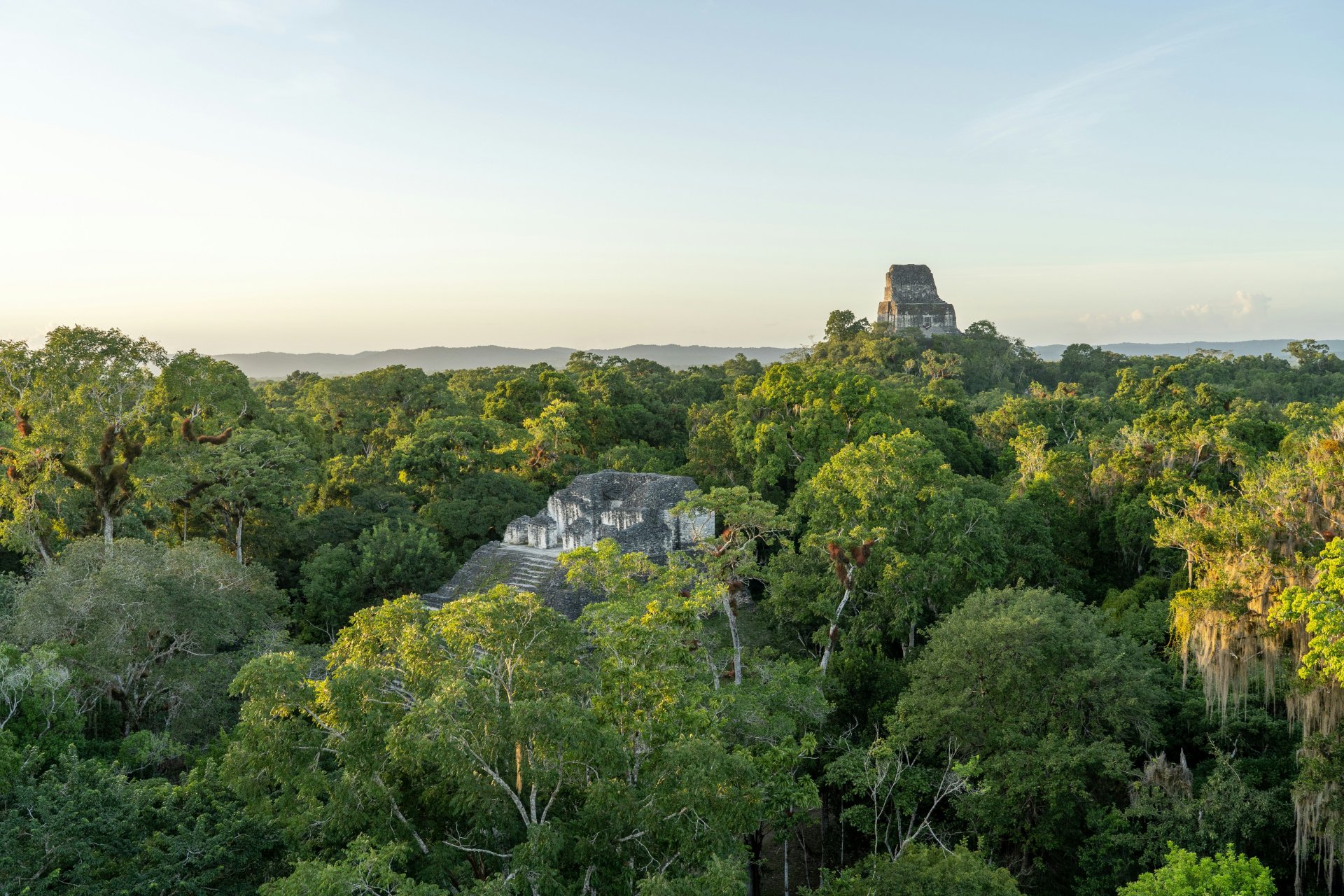
Maya: A Living Forest · Opening story
What does it take to keep a forest alive—and what might we miss if we look only at its trees?
In northern Guatemala’s Petén region, the Maya Biosphere Reserve brings forests, wildlife, archaeological places, and people’s livelihoods into the same story. Established in 1990, it is not one enormous national park with a single approach to protection. It includes core protected areas, a multiple-use zone, and a southern buffer zone, with different responsibilities and rules.
Those distinctions matter. Understanding this forest means looking beyond its boundaries to the people making decisions about its future.
A living from a standing forest
For some communities, the forest is both a home and a source of work.
ACOFOP, the Association of Forest Communities of Petén, describes community forestry that connects carefully managed timber harvesting with products such as xate palm leaves, ramón seeds, allspice, and natural chicle. Its account also includes community patrols, firebreaks, and training that passes technical skills and forest knowledge to younger residents.
These are not separate stories about earning a living and protecting nature. They are connected responsibilities—and they raise questions worth following.
What helps that work endure? Who makes the decisions? What becomes difficult when resources are limited? And what can we learn from the people carrying those responsibilities?
Look beneath the canopy
Keeping trees standing matters. But a green canopy cannot tell us everything about the life beneath it.
Camera-trap research in the reserve found encouraging similarities between a community-managed forest and strictly protected comparison areas, alongside differences in how individual species used the landscape. The lesson is not that every approach produces the same result. It is that understanding forest care requires a closer look at particular animals, places, and pressures.
That is the approach this campaign will take: follow the evidence, examine what it can—and cannot—tell us, and resist turning a complicated living landscape into a simple success story.
The journey begins here
Through Maya: A Living Forest, we want to understand what helps this landscape flourish: its wildlife and habitats, the communities connected to it, and the knowledge and continuing work involved in caring for its future.
We will begin with the landscape itself, then look more closely at community forestry, wildlife research, conservation efforts, and the work of protecting it.
Our starting point is published research and information from organizations involved. As the reporting develops, we will listen directly to people doing the work, understand their priorities, and investigate where greater understanding or participation could be useful.
Next, we’ll look more closely at the landscape itself—its geography, history, and the maps that shape how we understand it. Watch for updates as this journey unfolds, including in Network For Ecology Weekly.
Sources and methods
- CONAP accountability report and 2020 annual report—reserve history and management context.
- ACOFOP’s community forest-management account—the organization’s description of livelihoods, protection work, and training.
- Camera-trap research—observations from 2018–2019; findings concern estimated species richness and site use, not current population counts.
This opening draws on published research and organizational sources, not firsthand field reporting. Studies describe particular places and periods; direct community interviews and follow-up are planned.
Photo by Paweł Wielądek / Unsplash. Used under the Unsplash License.